
3PL vs In-House Logistics: How to Make the Right Call
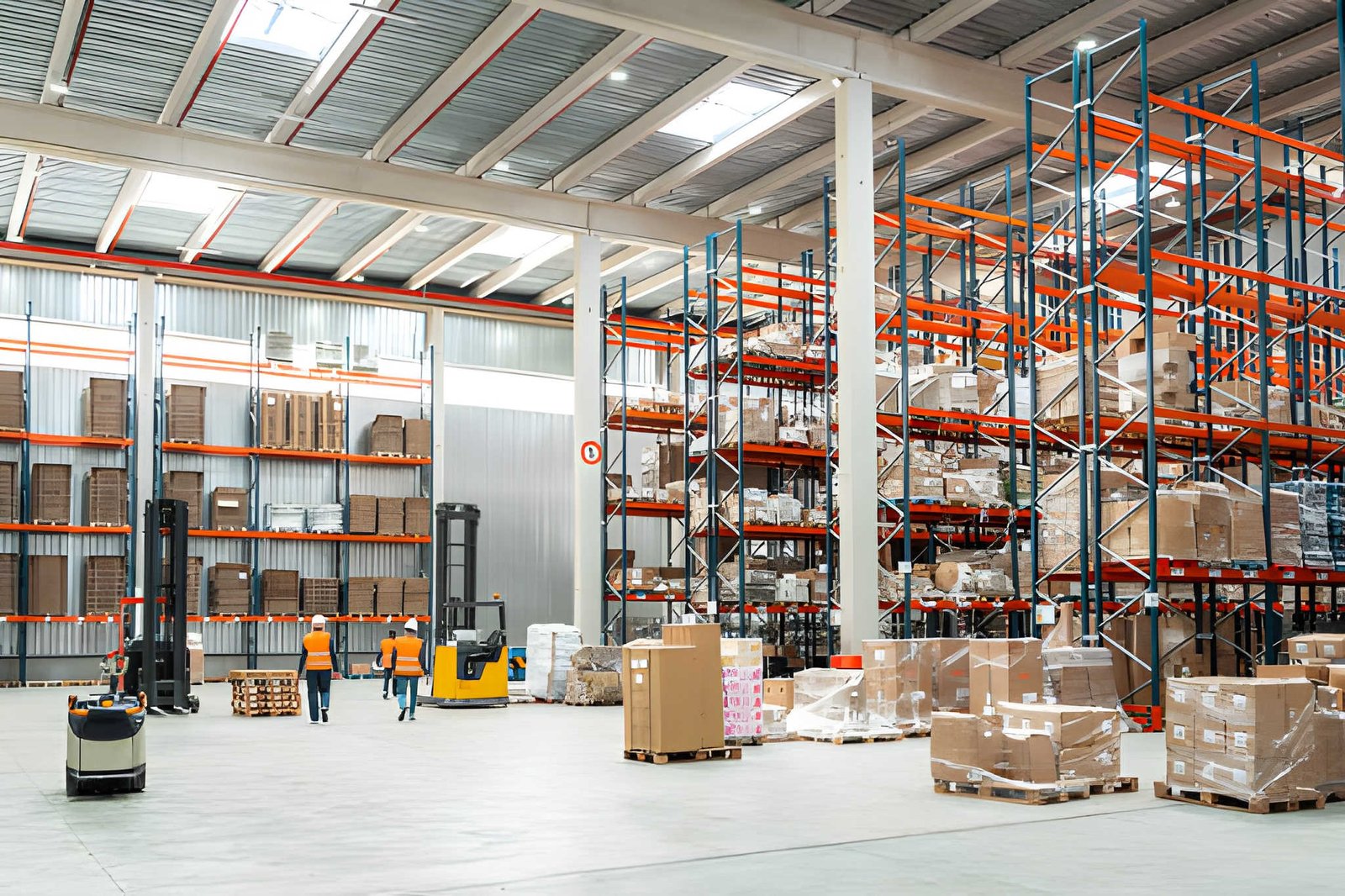
A decision framework for supply chain leaders weighing whether to outsource logistics or keep it in-house.
At some point, almost every growing company hits the same question: do we keep building our logistics operation internally, or do we hand it to a third-party logistics provider through 3PL logistics outsourcing? It rarely starts as a strategic debate. It usually starts as a pain point. A warehouse running out of space. A peak season that overwhelms the team. A new market that would require infrastructure the company does not have. The decision between 3PL and in-house logistics is, at its core, a decision about where your company should spend its capital, its attention, and its operational energy.
This guide lays out the real trade-offs without pushing you toward a predetermined answer. Outsourcing is the right move for many companies and the wrong move for others, and the difference comes down to specifics: your cost structure, your growth trajectory, your freight profile, and how much control your operation genuinely requires. By the end, you should have a clear framework you can use to build an internal recommendation.
What Companies Are Actually Weighing
The 3PL versus in-house question is an operational and financial decision before it is anything else. In-house logistics means your company owns the process end to end: the facilities, the staff, the technology, the carrier relationships, and the daily execution. A third-party logistics provider replaces some or all of that with a partnership, where an outside specialist supplies the infrastructure, systems, and expertise and you pay for the capacity you use.
Neither model is universally cheaper or better. The honest comparison is about how costs behave, how quickly you can scale, how much control you retain, and how the choice frees or consumes the time of your internal team. Companies that frame this as an emotional question (the comfort of control versus the unknown of outsourcing) tend to make worse decisions than companies that frame it around concrete operational signals.
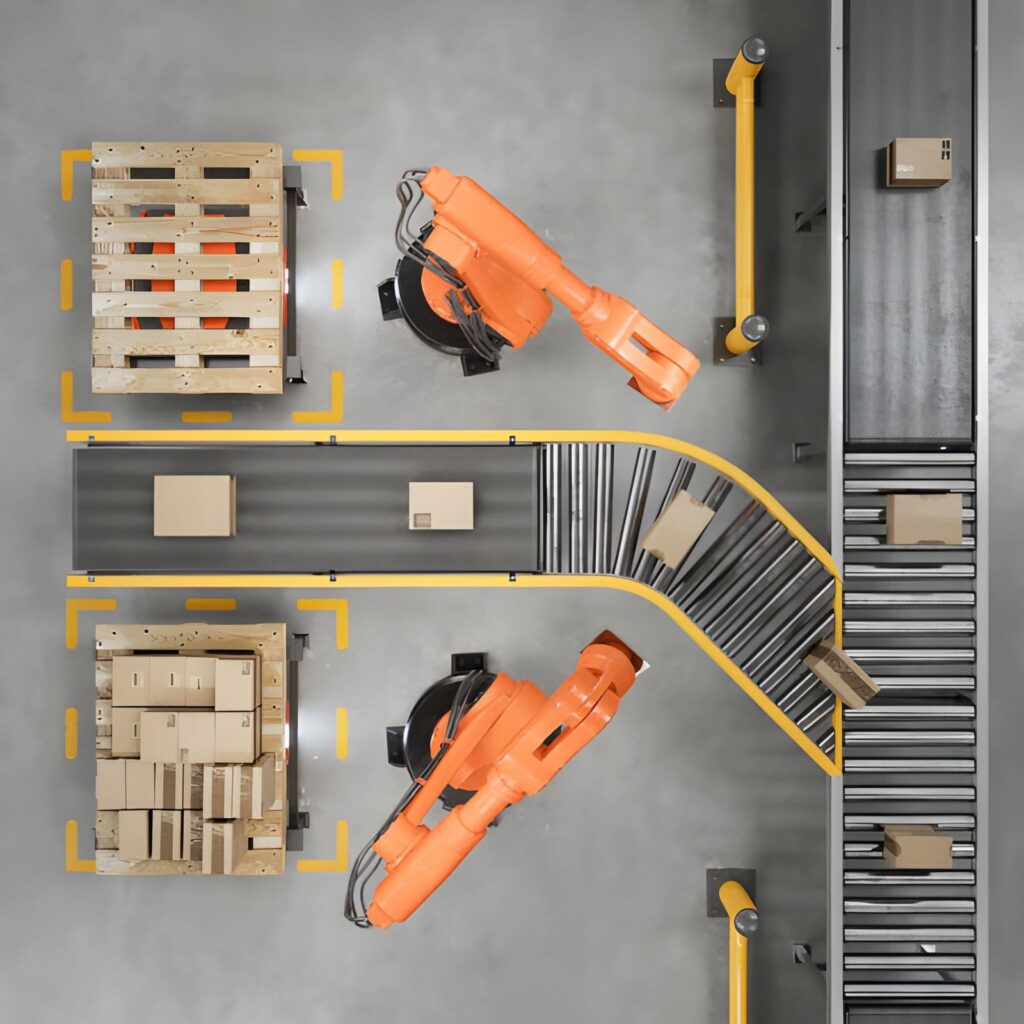
The Core Comparison
Across the dimensions that matter most, here is how the two models compare:
| Dimension | In-House Logistics | 3PL Logistics |
|---|---|---|
| Cost structure | Capital-heavy and largely fixed. You pay for facilities, equipment, and staff whether or not volume justifies it. | Variable. Fixed costs convert to per-use costs that flex with your actual volume. |
| Scalability | Slow. Adding capacity means new space, new hires, and new systems. | Fast. Capacity expands and contracts through the provider's existing network. |
| Technology | You buy, integrate, and maintain your own WMS, TMS, and reporting tools. | Included in the service, often more advanced than a single company would build alone. |
| Expertise | Built internally over time. Strong for your specific operation, slower to broaden. | Pre-existing across many clients, modes, and scenarios. |
| Control | Full and direct. You set every process and see every detail. | Shared. You set requirements and monitor performance through the provider. |
| Speed to market | Slower to enter new regions or channels. | Faster, using the provider's established footprint. |
The pattern in that table is the heart of the decision. In-house buys control and customization at the cost of flexibility and capital. A 3PL buys flexibility, speed, and access to expertise at the cost of some direct control. Which trade you should make depends on your situation.
When Outsourcing to a 3PL Makes Sense
Certain operational signals point clearly toward a 3PL. If several of these describe your business, outsourcing deserves serious evaluation:
- Volume swings seasonally. If you need significant capacity for two or three months a year and far less the rest of the time, building in-house means paying for idle infrastructure most of the year. A 3PL absorbs the peak without the year-round cost.
- You are growing faster than your infrastructure. Rapid growth often outpaces the ability to lease space, hire staff, and stand up systems. A 3PL lets you scale capacity ahead of building it yourself.
- You are entering new regions. Expanding into a new geography through a 3PL’s existing footprint is faster and cheaper than building a presence from scratch, and it lets you test the market before committing capital.
- Your freight is multi-modal or complex. Managing full truckload, less-than-truckload, intermodal, and parcel across many lanes requires expertise and carrier relationships that a specialist already has.
- Logistics is not your core competency. If the energy your team spends managing logistics would generate more value pointed at product, sales, or customers, outsourcing the operational load is a strategic reallocation, not just a cost decision.
When Keeping Logistics In-House Makes Sense
Outsourcing is not the answer for everyone, and any honest comparison has to say so. In-house logistics is often the better choice when:
- Your volume is high and your lanes are consistent. A large, stable operation with predictable freight can sometimes achieve better economics in-house, because the fixed-cost model is fully utilized year-round.
- Your freight is highly specialized. Products with unusual handling, strict quality protocols, or proprietary processes can be easier to control directly than to specify and monitor through a provider.
- Regulatory oversight demands direct control. Some regulated industries, like pharmaceuticals or aerospace, maintain tighter compliance by keeping sensitive handling in-house.
- You already have strong internal logistics teams. If your operation is mature and performing well, the question may be optimization rather than outsourcing.
It is worth noting that the choice is not always all-or-nothing. Many companies run a hybrid model, keeping core or sensitive operations in-house while outsourcing overflow, seasonal volume, or specific regions to a 3PL. The hybrid approach lets a company match each part of its logistics to the model that fits it best.
An Evaluation Framework You Can Use
To assess your own situation, work through these questions honestly. They are the same ones a thorough internal recommendation would address:
- Cost behavior: Are your logistics costs mostly fixed, and is that infrastructure fully utilized year-round, or are you paying for capacity you only use part of the time?
- Growth trajectory: Is your volume stable and predictable, or growing and uncertain? The more uncertain the growth, the more valuable variable-cost flexibility becomes.
- Hidden in-house costs: Have you accounted for technology, management overhead, hiring, training, and carrier-management time, not just rent and labor? In-house costs are routinely underestimated because these are easy to overlook, which is why a full cost analysis of 3PL outsourcing is the clearest way to weigh the two models side by side.
- Control requirements: Does your freight genuinely require direct oversight, or does it just feel safer to control? Be honest about the difference.
- Opportunity cost: What would your team accomplish if it were not managing logistics day to day?
If your answers cluster around variable demand, uncertain growth, underused capacity, and high opportunity cost, a 3PL is likely the stronger move. If they cluster around stable high volume, specialized freight, and genuine control requirements, in-house may still be right. And if they fall in between, a hybrid model may serve you best.
Where Ready 2 Xecute Fits
When the evaluation points toward outsourcing, the next step is finding a provider that handles the full picture rather than a single piece of it. Ready 2 Xecute manages logistics as a connected operation: transportation, 3PL warehousing and inventory management, fulfillment, and the technology that ties them together, with the carrier network and operational depth to flex as your volume moves. If you are working through the in-house versus 3PL decision, a conversation about your specific freight profile and cost structure is the fastest way to get a clear answer.
Frequently Asked Questions
Is it cheaper to outsource logistics to a 3PL?
It depends on how your costs behave. A 3PL converts fixed costs into variable ones, so it is often cheaper for companies with seasonal or uncertain volume that would otherwise pay for idle capacity. For very high, stable volume that fully utilizes in-house infrastructure year-round, in-house can be competitive. The honest comparison requires counting the hidden costs of in-house logistics, including technology, management time, hiring, and training.
What does a 3PL actually manage?
A full-service 3PL can manage warehousing and inventory, order fulfillment, transportation and carrier procurement, returns, and the technology layer that provides visibility across all of it. Some companies outsource the entire logistics operation; others outsource only specific functions like transportation or overflow warehousing.
Can I use both a 3PL and in-house logistics?
Yes. A hybrid model is common. Companies often keep core, high-value, or regulated operations in-house while outsourcing overflow volume, seasonal peaks, or specific regions to a 3PL. This lets each part of the operation use the model that fits it best.
How do I know when it is time to switch to a 3PL?
Common signals include seasonal volume spikes that strain your team, growth that is outpacing your infrastructure, expansion into new regions, capital that would be better spent elsewhere, and internal systems that cannot scale. When several of these appear at once, it is usually time to evaluate outsourcing.